Watched episode 1-7 in 2023 NOT the later two
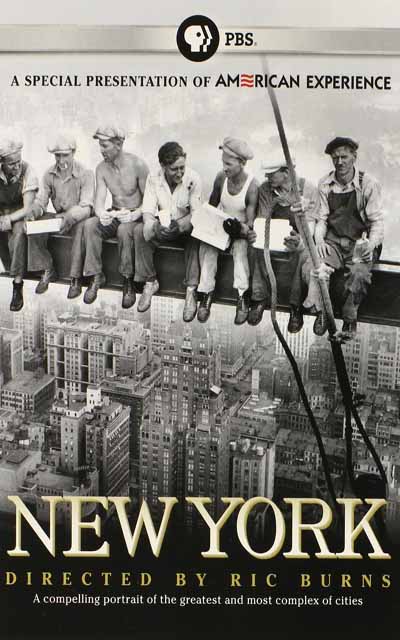
New York: A Documentary Film is an eight-part, 17½ hour, American documentary film on the history of New York City. It was directed by Ric Burns and originally aired in the U.S. on PBS. The film was a co-production of Thirteen New York and WGBH Boston.
The much anticipated final two episodes of the acclaimed, Emmy winning series, “New York: A Documentary Film” are narrated by David Ogden Stiers. Episodes six and seven of the series — directed by acclaimed filmmaker Ric Burns — examine the history of this great city and explore the forces that have shaped it from the Great Depression down to today.
Episodes
1.1 Episode One: The Country and the City (1609–1825) (November 14, 1999)
1.2 Episode Two: Order and Disorder (1825–1865) (November 15, 1999)
1.3 Episode Three: Sunshine and Shadow (1865–1898) (November 16, 1999)
1.4 Episode Four: The Power and the People (1898–1918) (November 17, 1999)
1.5 Episode Five: Cosmopolis (1919–1931) (November 18, 1999)
1.6 Episode Six: City of Tomorrow (1929–1941) (September 30, 2001)
1.7 Episode Seven: The City and the World (1945–2000) (October 1, 2001)
1.8 Episode Eight: The Center of the World (1946–2003) (September 8, 2003)
Episode One: The Country and the City (1609–1825) (November 14, 1999)
The first episode of the series begins with the founding of New Amsterdam, a Dutch trading post. The city starts to take shape as New Amsterdam becomes British New York. By the Revolutionary War, the city becomes the site for several key battles. This episode also covers the building of the Erie Canal.
Episode Two: Order and Disorder (1825–1865) (November 15, 1999)
Episode Two finds the city as the largest port in the country. Waves of Irish and German immigrants flood into the city between 1825 and 1865 only to find that New York is not so welcoming to immigrants. Frederick Law Olmsted and Calvert Vaux shape the city with their design for Central Park but social unrest still ran high for the working classes, coming to a climax with the draft riots of 1863.
Episode Three: Sunshine and Shadow (1865–1898) (November 16, 1999)
The Gilded Age following the Civil War saw the rise of the robber barons and the schism between wealth and poverty widen dramatically. The political life of the city, exemplified by William M. Tweed and Tammany Hall descended into total corruption. As the turn of the century dawned, New York City annexes Brooklyn, Queens, the Bronx, and Staten Island.
Episode Four: The Power and the People (1898–1918) (November 17, 1999)
As the city starts building the skyscrapers that would make its skyline iconic, 10 million immigrants arrive in New York. The immigrants lived in frequently squalid conditions and worked in the city’s most undesirable jobs. In 1911, when 146 female Jewish and Italian immigrants died in the Triangle Shirtwaist Factory fire, the city was largely unified in the successful demand for legislation on new factory safety reforms and labor laws.
Episode Five: Cosmopolis (1919–1931) (November 18, 1999)
Following World War I, Manhattan becomes the cultural capital of the world, serving as the home to the brand new industries of radio broadcasting, magazines, advertising and public relations. Major cultural contributions were made by F. Scott Fitzgerald, George Gershwin, Duke Ellington and Louis Armstrong, and the Harlem Renaissance was the banner under which an explosion of African American culture and creativity lived. As the Great Depression dawned, the Chrysler Building and Empire State Building were completed.
Episode Six: City of Tomorrow (1929–1941) (September 30, 2001)
As the Great Depression took hold of the City, Mayor Jimmy Walker was forced to resign in disgrace, giving way to Mayor Fiorello La Guardia, one of the most influential mayors in New York City history. Mayor La Guardia, along with Robert Moses revitalized the city with the help of federal funds from Franklin Delano Roosevelt’s New Deal.
Episode Seven: The City and the World (1945–2000) (October 1, 2001)
In the aftermath of World War II, southern African-Americans moved north and Puerto Rican immigrants pour into the city, a trend which would continue for the next thirty years. Robert Moses waged a campaign of urban renewal, including adding highways to the city, but white flight to the suburbs continued. The destruction of the old Penn Station in 1963 and the protests against Moses’s plans for the Lower Manhattan Expressway lead to the landmarks preservation act, ensuring the survival of New York’s most architecturally important buildings. Social and financial crisis in the 1960s and 1970s took a toll on the city, but the city’s revival since the 1970s has been enduring.
Episode Eight: The Center of the World (1946–2003) (September 8, 2003)
Tells the story of the rise and fall of the World Trade Center, and was produced following the September 11, 2001 terrorist attacks.
We think we watched the 1st 5 episodes a few years ago, just watched episode 1 on 2-28-2015
Epiosodes 2-6 watched July-12th to 16th
Leave a Reply